
Lebanon County Arrest History
An arrest can create separate records at the police agency, Central Booking, Lebanon County Correctional Facility, an MDJ, PSP Central Repository, and Common Pleas. LiveScan fingerprints and CPIN photographs support identity processing. First charges may later be amended, withdrawn, dismissed, or graded differently.
Use the police report for the event narrative, LCCF for current custody, UJS for court action, and PATCH for releasable repository history. A booking event proves processing, not guilt.
Lebanon County Arrest Custodians
The Sheriff serves warrants and transports prisoners but does not keep each police narrative. Lebanon City Police, Western Lebanon County Regional Police, local departments, and PSP Jonestown keep their own incident files. Ask the agency named on the complaint. The Sheriff page states its warrant role.
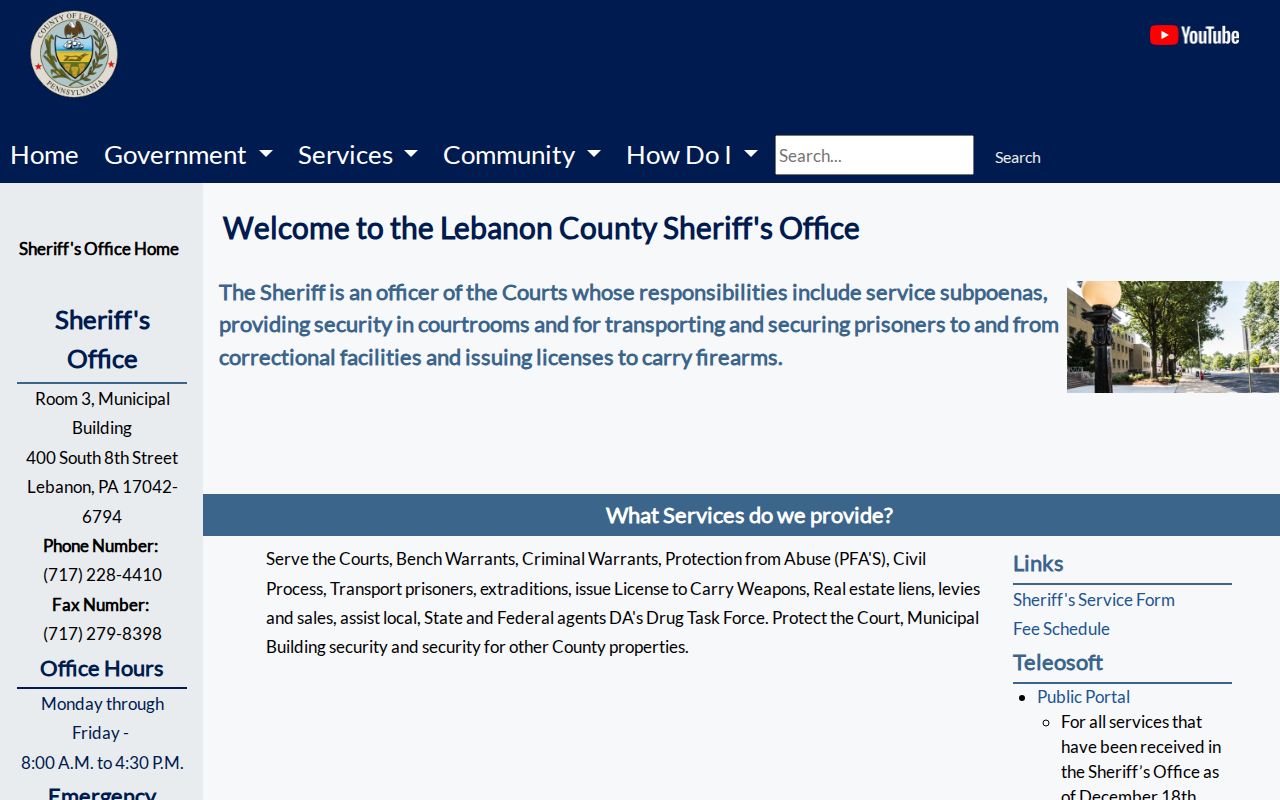
For a current warrant concern, call the Sheriff at 717-228-4410 rather than relying on a stale docket entry.
Lebanon County Sheriff
400 S. 8th St., Room 3
717-228-4410
Weekdays 8:00 a.m.-4:30 p.m.
Looking Up Lebanon County Arrests
Lebanon County has no official public booking roster. Use the phone and custodian chain instead.
Keep the incident number, OTN, date, place, and agency name when known. Those details help connect records held by different offices.
- Call LCCF at 717-274-5451 for present county custody.
- Request the incident report from the arresting agency named on the complaint.
- Search UJS at MDJ level, then Common Pleas if charges were held.
- Use Pennsylvania State Police PATCH for repository history.
- File a narrow county RTKL request for releasable county booking data.
Request Lebanon County Booking Data
The county Right-to-Know channel accepts a request for discrete existing county records. Send the subject, date range, and record type to recordsofficer@lebanoncountypa.gov or Room 207, 400 S. 8th St. The county generally responds within five business days or invokes a lawful extension. Court case records follow judicial policy, while police investigative material may be exempt.
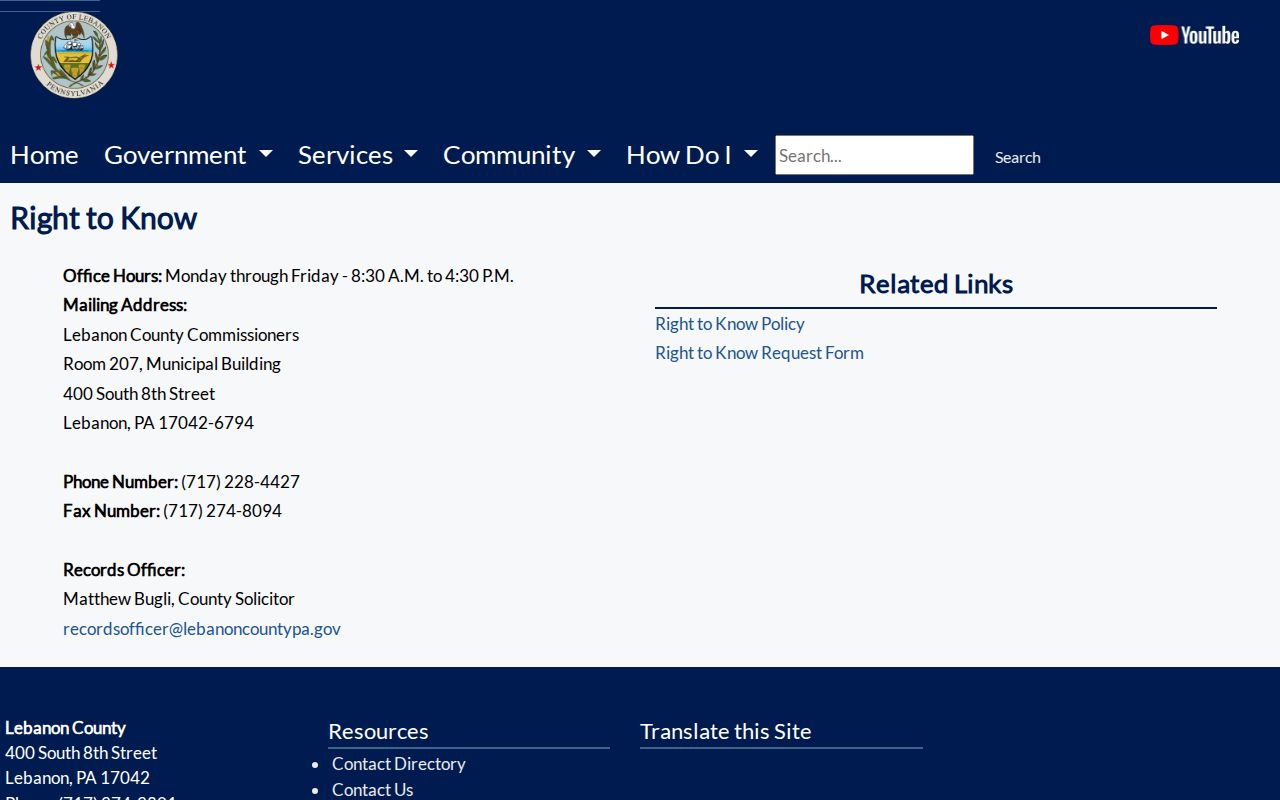
A request cannot make the county create a roster or produce another police agency's file.
Inside a Lebanon County Arrest Record
Fields are spread across records. The agency report centers on the event, while booking ties identity and custody to the complaint.
A docket records later judicial action. Read the court outcome before treating the initial charge as the lasting result.
| Incident and OTN | Links agency, booking, and court data. |
|---|---|
| Booking Date & Time | When intake processing occurred. |
| Arresting Agency | The correct custodian for its report. |
| Charges | Initial statutes and grades, subject to change. |
| Bond | MDJ bail type, amount, status, and actions. |
| Booking photo | Captured in processing but not offered through a public county gallery. |
| Release Status | Must be confirmed with the current custodian. |
Booking Logs and Recent Arrests
No verified Lebanon County booking log, roster, or mugshot gallery exists. Call LCCF, then check the MDJ docket. An agency release describes an allegation and must not be labeled a conviction.
The official facility page is the county custody source.
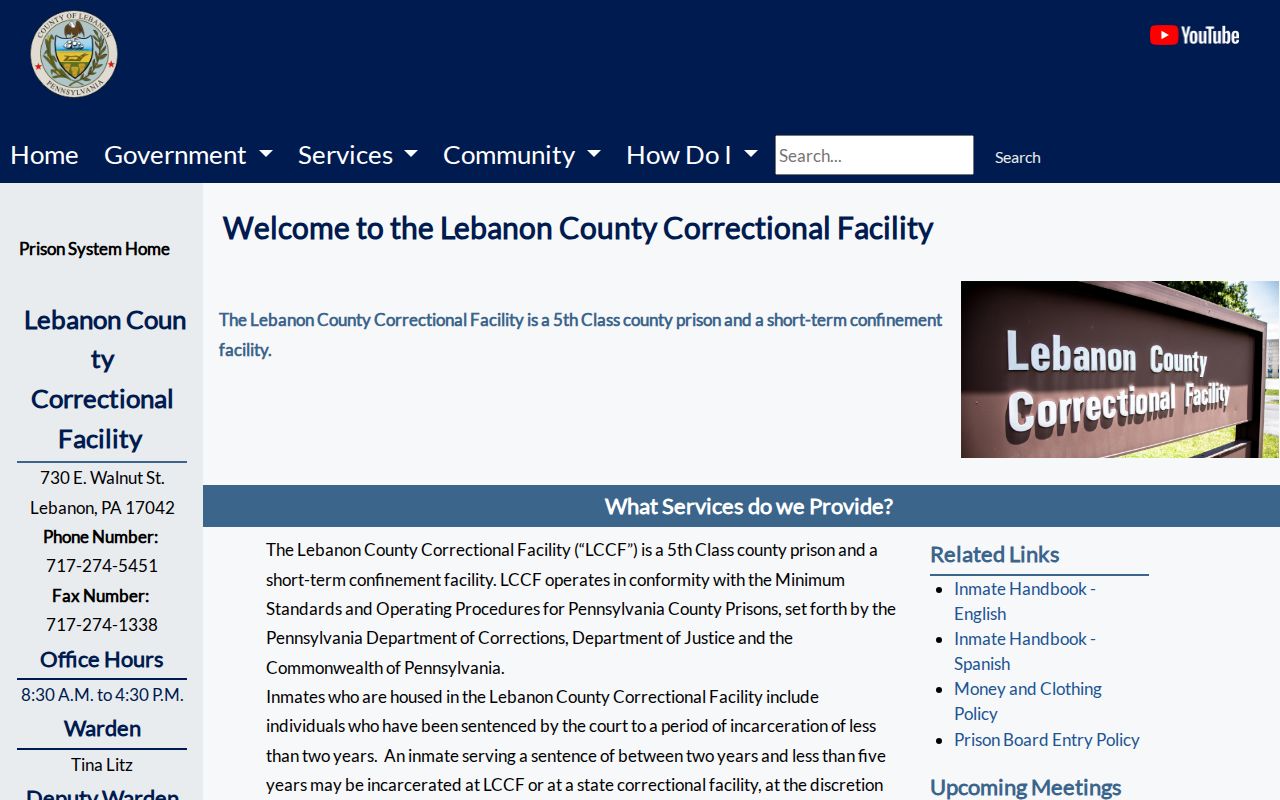
A historical commitment entry does not confirm current custody.
Lebanon County State Custody Check
When a county case ends in state custody, use the Pennsylvania DOC Inmate/Parolee Locator. It searches names, inmate number, gender, committing county, location, and age range. It excludes LCCF and other states.
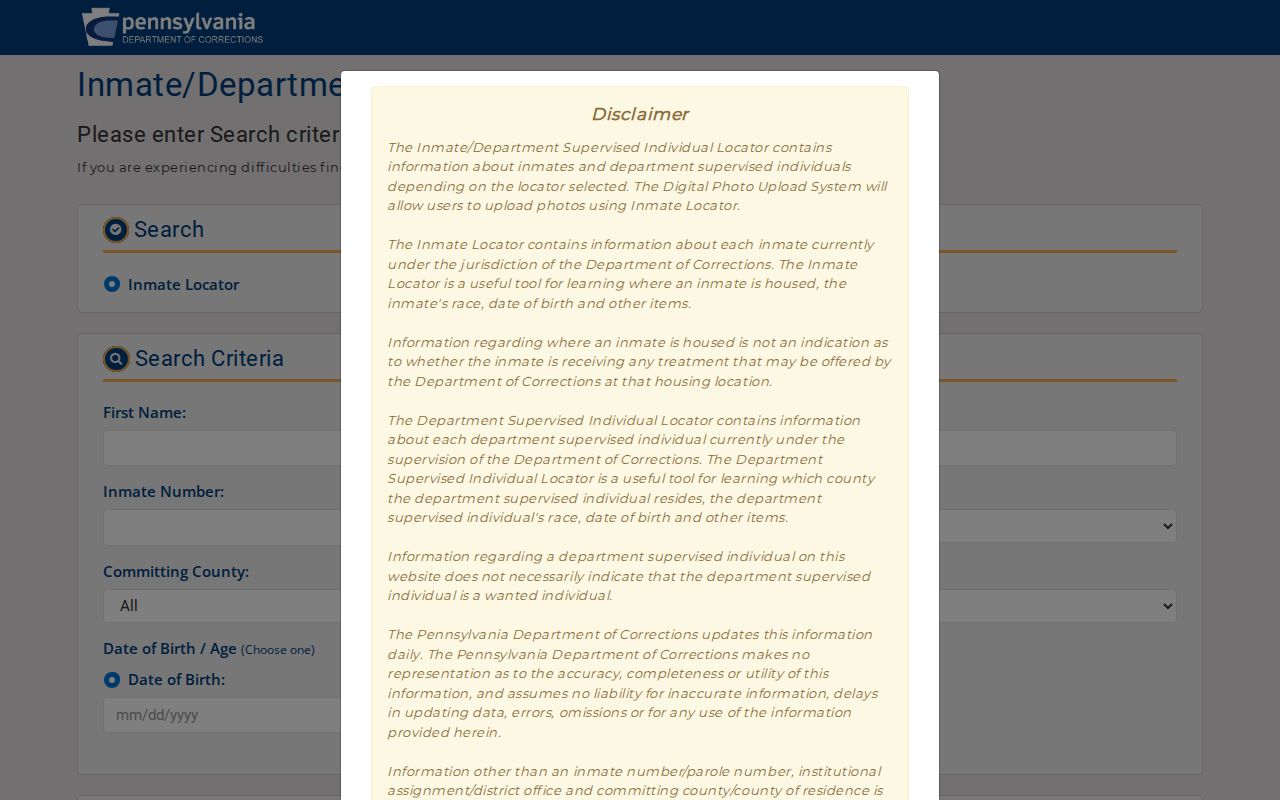
A transfer explains why the court shows commitment while the county facility reports no current custody.
Arrests Are Not Convictions
An arrest records an allegation and processing. A conviction is a court outcome after plea or trial. Check the Lebanon County criminal court case file for each charge's result.
| Arrest Record | Conviction Record |
|---|---|
| Police agency and booking custodian | The court |
| Processing or custody occurred | A finding of guilt was entered |
| Agency and LCCF records | UJS, Clerk, and repository |
| Release or later dismissal may follow | Sentence, appeal, or lawful sealing may follow |
Note: An arrest is not proof of guilt; the court disposition controls the outcome assigned to each filed charge.
Follow a Lebanon County Arrest
The record trail begins with the arresting agency's incident file. Transport and Central Booking add identity, property, fingerprints, photograph, and custody work. The complaint and OTN connect that processing to the MDJ docket. Preliminary arraignment brings the first bail decision. Release or commitment may follow, then a preliminary hearing. Charges held for court receive a Common Pleas number, where the District Attorney may change the charge set and the court later records the disposition and sentence.
That sequence explains common timing gaps. LCCF may know of custody before UJS publishes a searchable docket. A police release may appear before a hearing. PATCH may lag a newer local filing because repository data follows a reporting chain. Conversely, a UJS docket can contain motions or charge events that do not appear in the releasable PATCH product. Compare dates and identifiers rather than treating one source as a complete copy of another.
Incident reports remain agency-specific. Lebanon City Police, for example, operates its Records Section at 735 Cumberland Street and lists 717-272-6611. Its researched charges include $15 for a completed state crash report and $10 for an incident-verification letter, with photo identification. Western Lebanon County Regional Police is the present contact for Palmyra and Annville police records after the 2024 merger, even when an older docket uses a legacy agency label. Cornwall, North Cornwall, North Lebanon, South Annville, South Londonderry, and PSP Jonestown each keep their own files. Request the precise product needed. An incident narrative differs from a crash report, CAD or 911 material, and body-camera video. Retention, redaction, and fees can differ. Active criminal investigations, juvenile data, victim information, and security-sensitive parts may be withheld. A county RTKL submission cannot force a municipal police department to produce its file. Direct the request to the creator and describe the date, time, location, incident number, and involved-party status.
Booking-photo access is not a public mugshot gallery. Lebanon County publishes no such official gallery, and the absence of an online image proves nothing about an arrest. Current custody requires a call to LCCF. A state transfer requires the DOC locator. A court outcome requires UJS and, when an official copy matters, the Clerk or MDJ. Keeping those questions separate prevents a recent allegation from being repeated as a settled fact.
PATCH and Lebanon County Arrests
PATCH is the official Pennsylvania name-based repository product and costs $22 for a standard online request. It may return No Record, Under Review, or releasable criminal-history information. No Record does not prove that no arrest occurred because identity matching, timing, sealed matters, out-of-state events, and incomplete reporting affect scope. Under Review requires PSP handling rather than repeat guesses.
PATCH does not supply the local police narrative, live LCCF custody, or each filed court document. Those facts still come from the arresting agency, the county facility, UJS, and the Clerk. Follow the OTN and docket number across those records. This layered approach is especially important when booking charges differ from the District Attorney's later information.
Lebanon County also has no public live warrant search. A UJS warrant event is historical court data, not a real-time safety confirmation. Call the Sheriff at 717-228-4410 or the issuing court. A person trying to resolve a bench warrant should contact counsel or the Sheriff before appearing and should not rely on a web-search absence.
Custody location can change after sentencing. LCCF is a county and short-term facility, while the Pennsylvania DOC locator covers state institutions and state parole. It does not include county facilities. A state locator miss therefore does not answer whether a person is at LCCF, and an LCCF release does not answer whether a transfer occurred. Check the sentence on UJS, call the county facility, and use the state locator as separate steps. Federal custody requires the Bureau of Prisons locator, not either Pennsylvania source.
Lebanon County Police Record Routes
Lebanon County arrest records stay with the agency that made the arrest. Lebanon City Police has a Records Section at 735 Cumberland Street and answers at 717-272-6611. Western Lebanon County Regional Police now handles current Palmyra and Annville requests after the 2024 merger. An older Lebanon County docket may still carry a legacy agency name. Use the incident date to decide which office should receive the request.
Other Lebanon County departments include Cornwall Borough Police at 36 Burd Coleman Road, North Cornwall Township Police at 320 South 18th Street, and North Lebanon Township Police at 725 Kimmerlings Road. South Annville and South Londonderry maintain their own police channels. PSP Jonestown handles state-police incidents from its Route 72 station. A Lebanon County RTKL request sent to the county cannot make a borough, township, regional department, or PSP produce its separate file.
Describe the record, not a question. Give the Lebanon County agency an incident number when known, plus the date, time, location, and involved-party status. Ask separately for an incident narrative, crash report, CAD or 911 material, and body-camera video. Those Lebanon County records can follow different retention, redaction, and fee rules. Active investigations, juvenile information, victim details, and security-sensitive content may be withheld even when another part is releasable.
Match Lebanon County Booking to Court
The OTN is the best bridge from Lebanon County booking to the court file. It follows the offense event into the MDJ docket and can appear again in Common Pleas. Also compare the arresting agency, incident number, offense date, and charge descriptions. A Lebanon County booking charge may not match the later information because the District Attorney can amend, add, withdraw, or resolve counts.
First check the Lebanon County MDJ docket for preliminary arraignment, bail, and the hearing. If charges were held, open the Common Pleas criminal docket for motions, pleas, trial events, disposition, and sentence. A charge withdrawn at the MDJ level is not a conviction. A Lebanon County count dismissed later must also be read by its final disposition, not by the allegation at intake.
Timing can create a short gap. Lebanon County Central Booking or LCCF may have a custody record before UJS displays the complaint. A police release may precede the court record. PATCH can lag because disposition data must return through the reporting chain to PSP. When Lebanon County sources disagree, compare event dates and call the current custodian instead of choosing the most dramatic result.
Keep the Lebanon County Record Key
Keep a short Lebanon County record trail: the agency incident number, OTN, MDJ docket, Common Pleas docket, and each search date.
That Lebanon County sequence makes later corrections easier and shows which official source supplied each fact.