
Lebanon County Criminal Court Cases
Lebanon County uses two local court levels. A Magisterial District Judge receives the complaint, conducts preliminary arraignment, considers bail, and holds the preliminary hearing. Most summary matters end there. Felony and misdemeanor charges held for court move to the Court of Common Pleas of Lebanon County, the 52nd Judicial District. Common Pleas docket types include Criminal, Summary Appeal, and Miscellaneous. Miscellaneous matters can include bail appeals, search-warrant issues, and contempt.
The Clerk of Courts keeps the Common Pleas criminal file. Court Administration manages trial-court work but is not the copy counter. MDJ offices keep their preliminary and summary files. A reader may need both docket levels to trace one prosecution. The OTN, or offense tracking number, helps connect them.
Searching Lebanon County Case Records
The UJS Case Search is the free statewide starting point. Choose the court type before a name or number search.
Common Pleas criminal numbers commonly follow CP-38-CR-####-YYYY, with 38 identifying Lebanon County. Use fewer fields first, then narrow a common name with the county and filing-date controls.
- Choose Common Pleas Criminal for the major case or MDJ Criminal for its first phase.
- Search by docket number, participant name, organization, or OTN when offered.
- Select Lebanon County and narrow broad results by filing date or status.
- Open the sheet and compare OTN, originating docket, charges, entries, and disposition.
- Ask the Clerk or named MDJ for paper records and certified copies.
| Field Label | Type | Required | Notes |
|---|---|---|---|
| Court Type | Tab/dropdown | Yes | MDJ, Common Pleas, or appellate. |
| Search Type | Tab/radio | Yes | Docket, name, organization, or OTN. |
| County | Dropdown | Filter | Select Lebanon. |
| Docket Number | Structured text | When used | Common Pleas criminal often starts CP-38-CR. |
| Date Filed | Date range | No | Narrows broad matches. |
Lebanon County UJS Search View
The official portal separates court level from search type. Its public docket is an event summary, not a complete set of pleading images.
The UJS search screen shows those controls.
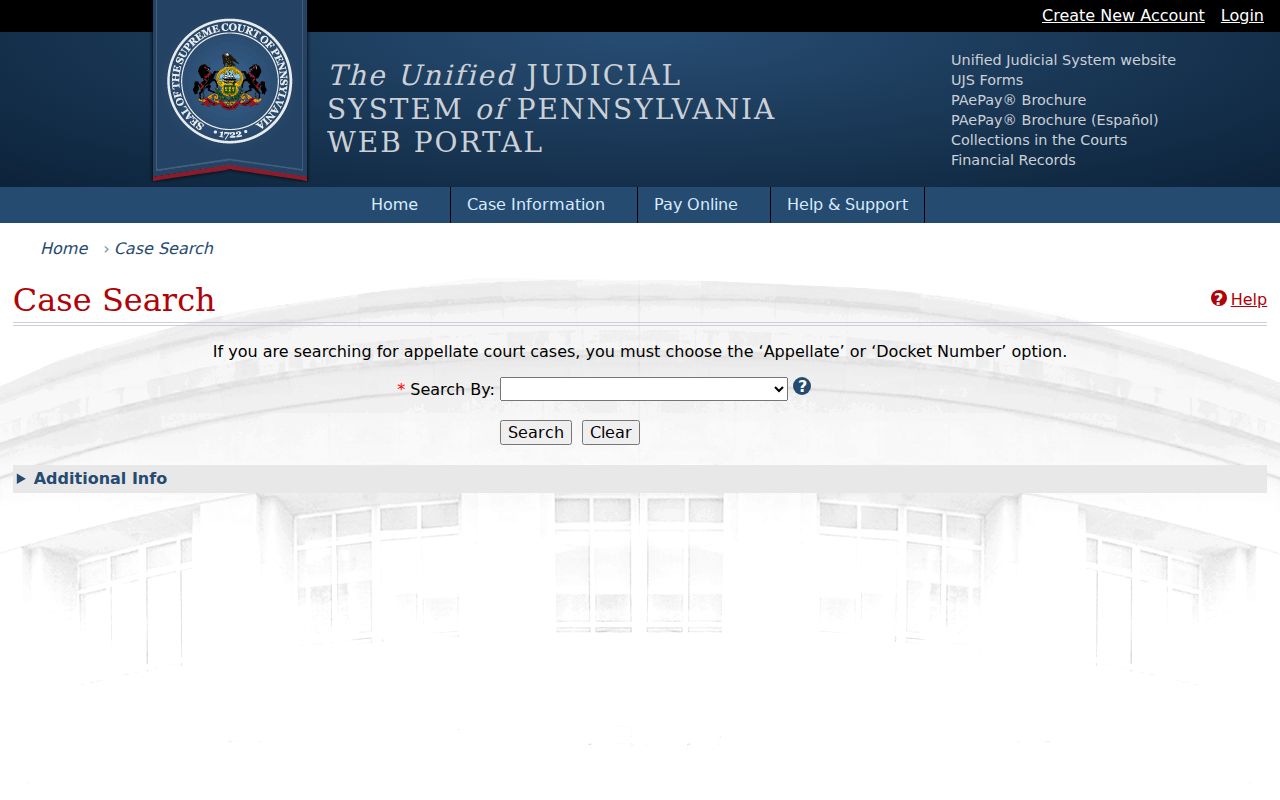
Choosing the wrong court level can hide the matching phase even when the case exists.
Inside a Lebanon County Case File
A docket organizes the prosecution rather than the arrest alone. It traces charges, hearings, rulings, outcomes, sentence, and money due.
Read every charge row through its disposition. A filed charge and its final result may differ.
| Case Number & Court | District, county, docket type, number, and judge. |
|---|---|
| Charging Document | Complaint or information, OTN, agency, statutes, and grades. |
| Docket Entries | Chronological event, filer, and date. |
| Hearing Dates | Listed calendar events and court activity. |
| Disposition & Judgment | Outcome and date for each charge. |
| Sentence & Conditions | Confinement, probation, restitution, costs, and commitments. |
Lebanon County Court Copies
A download does not include each filed paper. The Clerk of Courts, Room 102 at 400 S. 8th St., handles Common Pleas inspection, ordinary copies, certified copies, and older files. Call 717-228-4419 on weekdays from 8:30 a.m. to 4:30 p.m. Current researched fees are $0.50 per page and $15 for certification; verify before ordering.
The county page identifies the current criminal filing counter.
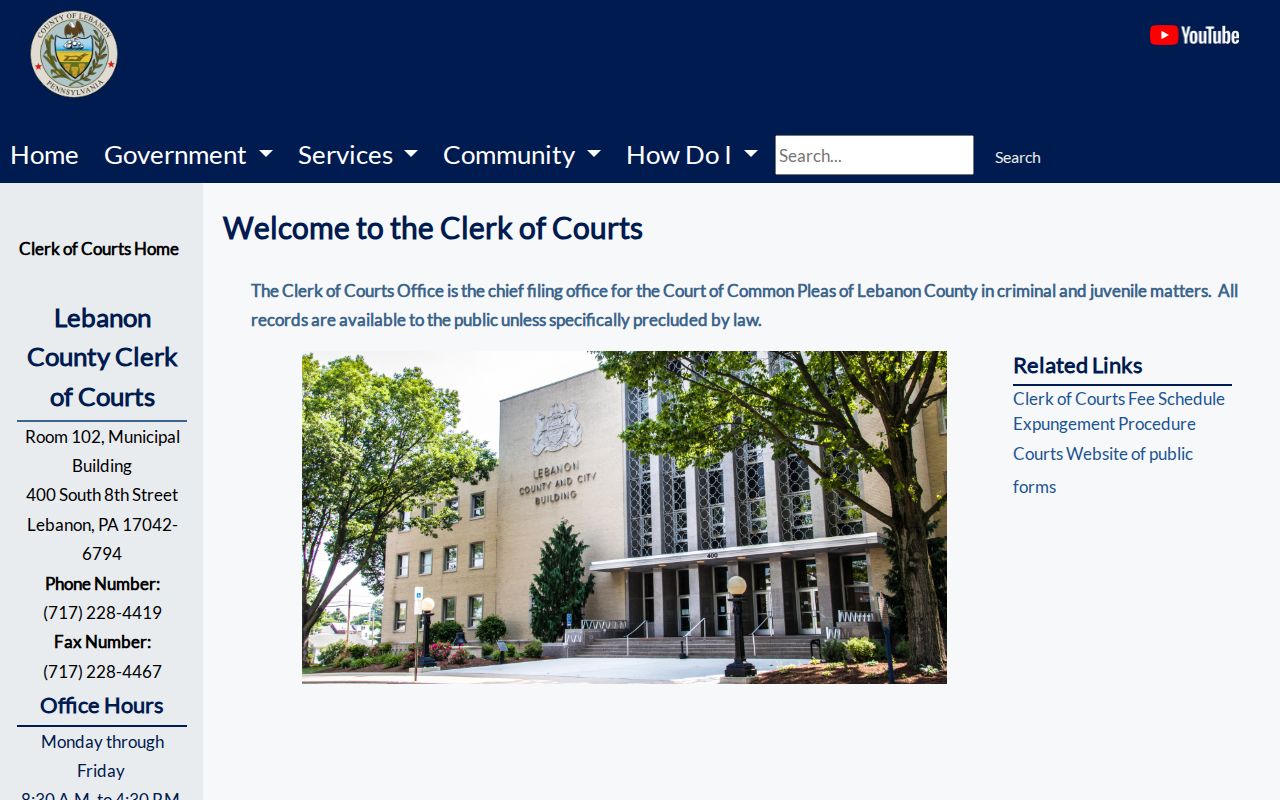
Give staff the docket number, since a common name may not identify one file.
How a Criminal Case Moves
An MDJ handles first judicial events and decides whether non-summary charges move ahead. The District Attorney may amend, add, withdraw, or resolve counts. Common Pleas then records a plea or trial result and sentence. Event dates are safer than a guessed timeline.
Case flow: Charges Filed › Arraignment › Pretrial › Plea or Trial › Disposition › Sentencing
The District Attorney page shows the local prosecution office.
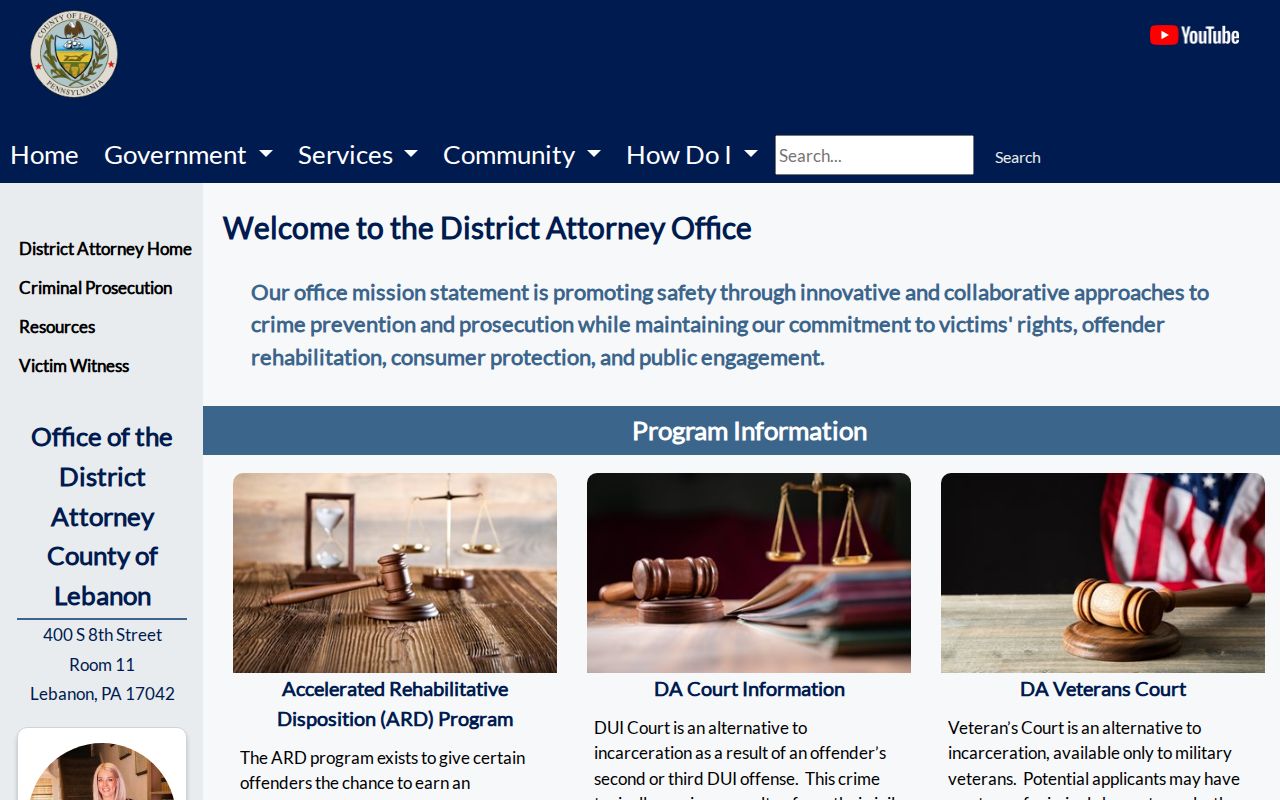
The filed outcome, not the booking charge, answers how each count ended.
Lebanon County Criminal Court Offices
Court Administration is in Room 311 at the Municipal Building and answers at 717-228-4440. MDJ offices at 502 State Drive serve Lebanon city wards, while other districts sit on East Walnut Street, Route 72, Cleona, and Palmyra. Contact the office shown on the docket for preliminary material.
The county court page identifies the trial-court administration channel.
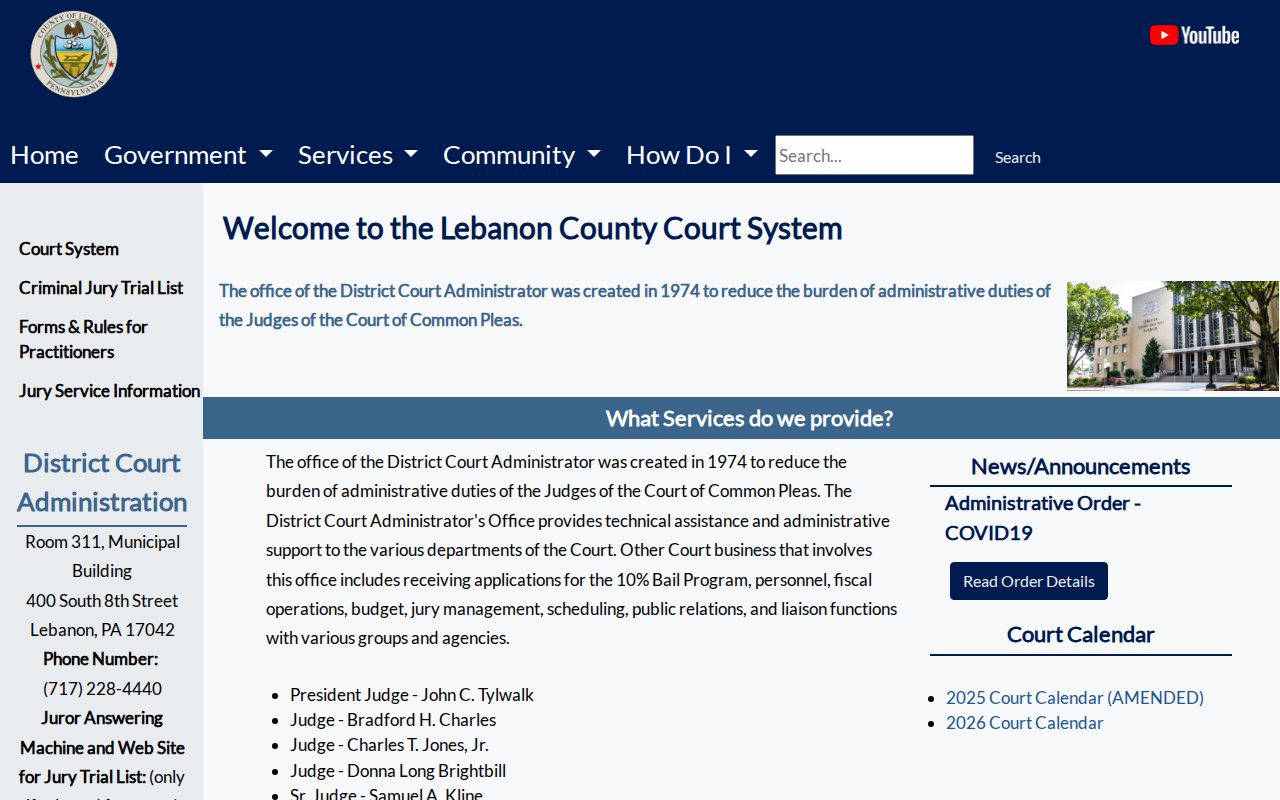
Administrative staff and file custodians have different roles, so routing the request saves time.
Case Record Access and Restrictions
The UJS public-access policy governs case records, not ordinary county RTKL processing. Juvenile, sealed, expunged, pending-expungement, limited-access, and retention-destroyed cases can be absent. Public views also redact Social Security numbers, account data, and protected victim or minor information.
Ask the Clerk about an older Common Pleas file and the named MDJ about that court's paper record. PATCH is governed by criminal-history law and is not a copy of the case file.
Lebanon County Case Outcomes
Dismissal ends a charge without conviction. Withdrawal often appears at the MDJ stage. Nolle prosequi means the Commonwealth stopped prosecuting that count. ARD is diversion that may support later dismissal and expungement. The Public Defender describes the local case path.
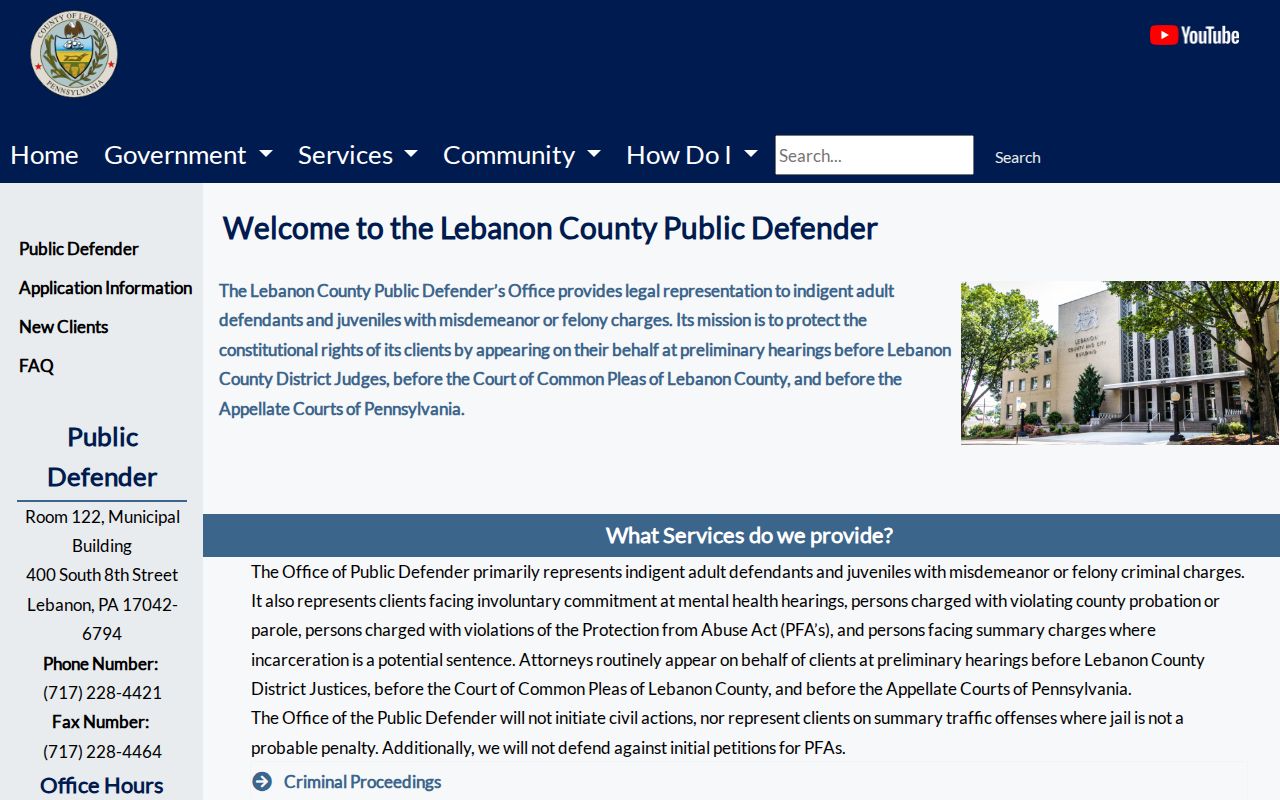
Match the term to each charge instead of giving the whole case one label.
The county also maintains a DUI Treatment Court team model.
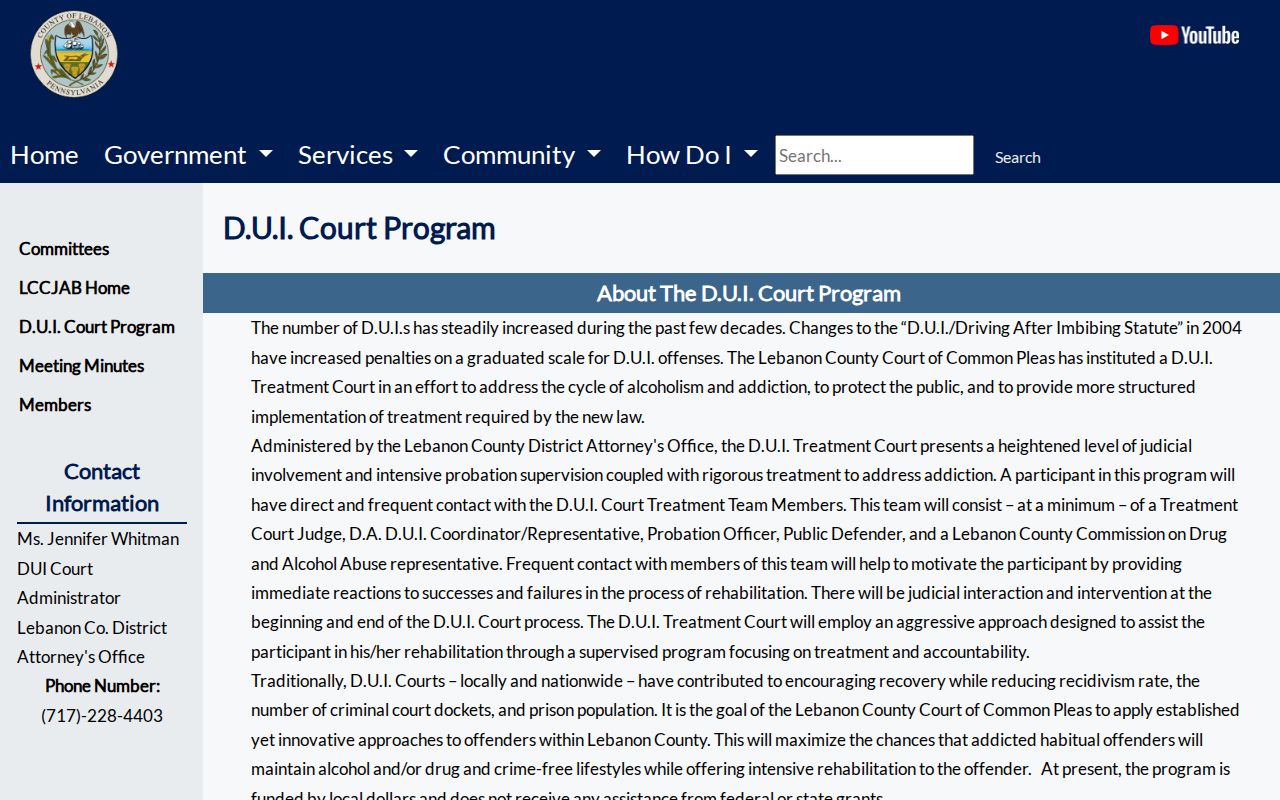
The case remains on the Common Pleas docket, while treatment and supervision details are not presumed public.
Older Lebanon County Court Records
A missing download can reflect age, retention, sealing, or the limits of the public interface. It does not by itself establish that no Lebanon County case existed. Start by checking both MDJ and Common Pleas search types, since a summary case may stay with an MDJ while a felony or misdemeanor held for court moves ahead. Re-run a name search with fewer limits. If an OTN appears on one docket, use it to test the other court level. Then call the custodian named on the result rather than sending a broad request to an unrelated county office.
Room 102 is the practical fallback for older Common Pleas material. The Clerk can explain inspection, ordinary copies, certifications, and whether a file is held in another format. MDJ records remain with the district office. The public docket sheet may list an event without offering the underlying motion or order as an image. That gap is normal. Ask for the exact filed item by title and date when possible. Certification is useful when an official copy is required, while a plain copy may be enough for personal review or understanding the case sequence.
Lebanon County court files also contain financial fields. The docket may show costs, fines, fees, restitution, and payments, but the live balance may need a separate UJS balance search or contact with County Collections. The local payment page states a $2.75 PAePay transaction charge and says that no phone payments are accepted. Mail payments use check or money order, never cash, and should include a name, docket number, and date of birth or another identifier. These payment channels do not change the conviction or sentence shown on the court record.
Access rules protect more than sealed cases. Public views omit account numbers, Social Security numbers, and protected information about minors and victims. A filing can be listed but unavailable online. Juvenile proceedings are handled apart from ordinary public criminal searches. Limited access and Clean Slate shield qualifying records from public view without making those terms identical to expungement. When a result seems incomplete, compare the filed events, call the custodian, and avoid filling gaps with assumptions.
Certify Lebanon County Case Records
Use the public docket to identify the exact case before ordering. A certified copy comes from the custodian, not from the public portal. Give Room 102 the Common Pleas number, document title, and filing date. For preliminary or summary material, call the MDJ shown on that docket. The researched Clerk schedule lists ordinary copies at $0.50 per page and certification at $15, but readers should verify current cost before authorizing the order.
When a file does not appear, search both court levels and loosen name filters. Then ask about age, retention, limited access, sealing, or expungement without assuming which rule applies. Court staff can explain access and copy procedure, but the docket itself remains the source for the filed charge, event sequence, disposition, and sentence.
Plan a Lebanon County Court Request
A strong Lebanon County request begins with the docket, not a broad question. Record the full number, court level, caption, OTN, filing date, and exact entry that matters. For a Lebanon County Common Pleas case, Room 102 is the file counter. For a Lebanon County preliminary or summary case, use the MDJ office printed on that docket. This routing keeps Court Administration, the District Attorney, and the Clerk from receiving a request for a record they do not hold.
The Lebanon County office list helps when a docket number ends at the wrong court. MDJ 52-1-01 and 52-2-01 sit at 502 State Drive. MDJ 52-3-01 is at 728 East Walnut Street, while 52-3-03 is on Route 72 North. The Cleona office is MDJ 52-3-04, and the Palmyra office is MDJ 52-3-05. Each Lebanon County MDJ handles preliminary and summary work within its district. The Common Pleas Clerk takes over the filed criminal case after charges are held for court.
Ask whether inspection, a plain copy, or a certified copy meets the need. A plain Lebanon County copy reproduces the available page. Certification adds the Clerk's official attestation and a separate researched fee. Some Lebanon County docket entries identify a filing that is not offered as a public download. In that situation, name the entry and filing date. Do not ask staff to create a case summary or legal conclusion. The request should seek an existing Lebanon County document.
Lebanon County Bail and Money Entries
Bail fields can change throughout a Lebanon County prosecution. The MDJ docket may show release on recognizance, unsecured bail, monetary bail, a commitment, or later action. A bench-warrant entry often follows a failure to appear, but it is historical docket data rather than a live safety confirmation. Read the entry date and later Lebanon County events before deciding that the condition remains current.
Financial fields also need context. A Lebanon County docket can list costs, fines, fees, restitution, assessments, and payments. County Collections handles Common Pleas criminal balances and divides accounts for staff work. PAePay offers an online balance and payment route with the researched $2.75 transaction fee. The Lebanon County office accepts several forms of in-person payment, but no phone payment. A payment record does not change the charge disposition, and the sentence entry remains the place to read the court-ordered result.
Keep the Lebanon County Case Key
Keep the Lebanon County case number on each copy and payment inquiry. The Lebanon County caption confirms the parties, while the Lebanon County event list confirms when an order was filed.
If the Lebanon County financial view and a mailed statement differ, contact Collections with that docket number. The Lebanon County Clerk remains the source for the filed order. Lebanon County access still depends on the record custodian.